START WITH WHAT THE BALL DOES
Your golf ball is trying to tell you something.
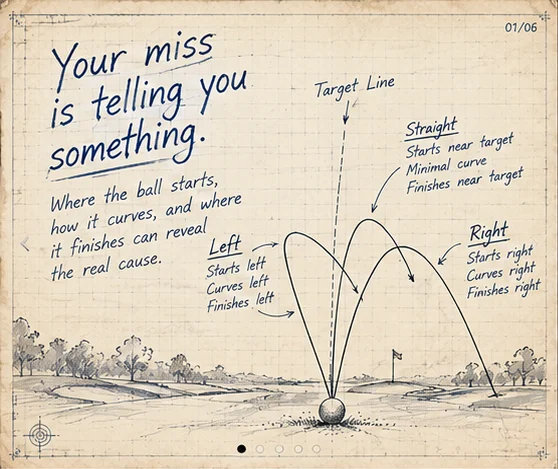
Starts left. Curves right. Thin again. You know the shot.
Before you change your swing, buy another club, or grab another drill, get clear on the shot you are actually trying to change.
Free evaluation · No launch monitor required · A few minutes
THREE THINGS. THAT’S THE SITE.
Understand it. Work on it. Keep it.
You do not need to learn the architecture of Swing Evaluation. Start where you are and move one step.
START WITH THE THING THAT BOTHERS YOU
Read enough to ask a better question. Then go hit balls.
These are not article categories. They are common golf problems with a direct way into Practice.
The ball keeps peeling right.
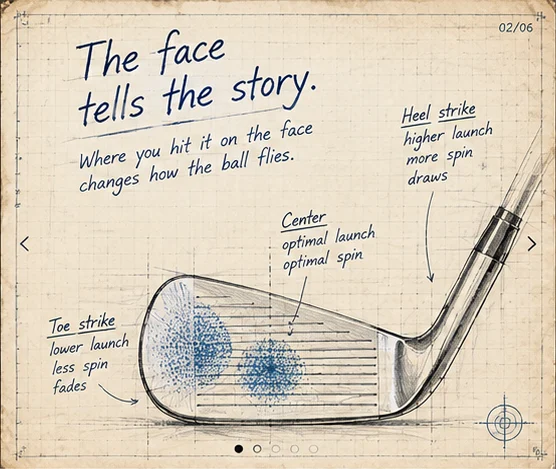
Start direction, curve and strike tell you more than “I slice it.”
Fat one. Thin one. Then one perfect.
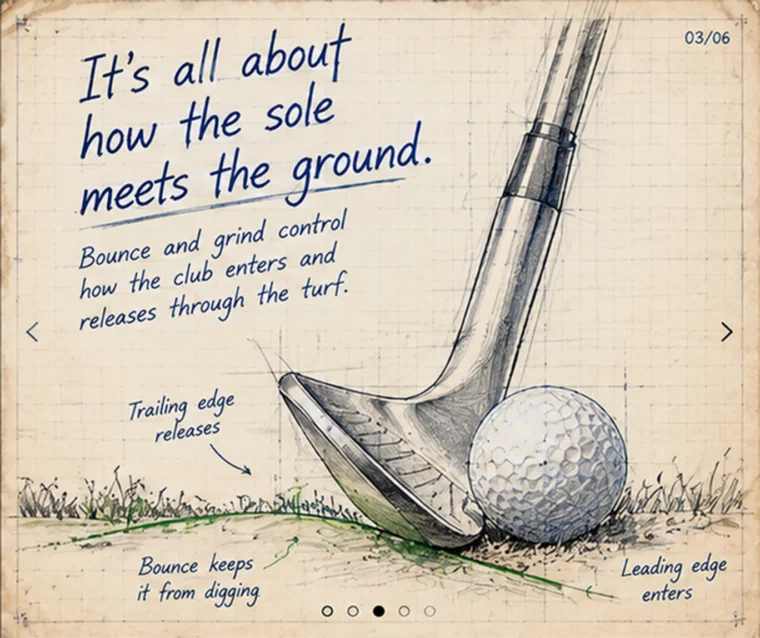
Look at where the club is bottoming out before chasing another swing thought.
I keep three-putting.
Was it the read, the start line, or the pace? They are different jobs.
I’m not sure how far these clubs really go.
Build carry windows you can use instead of remembering one hero ball.
THE LAB / PART OF UNDERSTAND
Sometimes you need to see it move.
The Lab is not another place you have to learn. Use it when a picture explains the relationship faster than another paragraph.
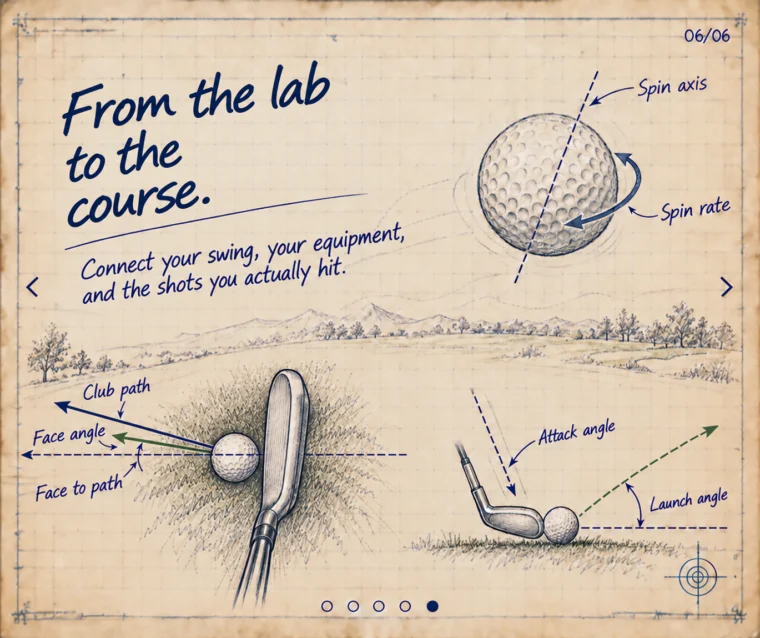
Why does it start left and finish right?
See start direction and curve separately.
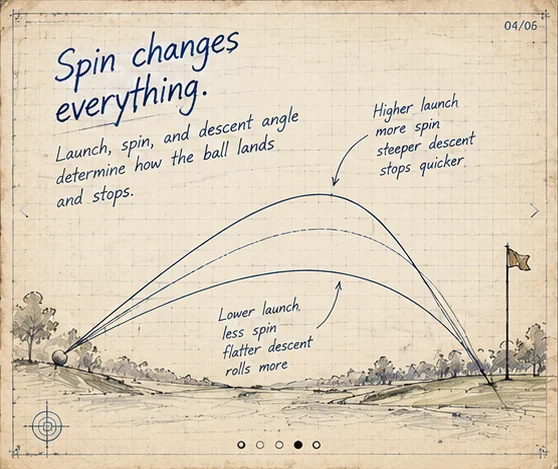
Open it →Why did that approach keep rolling?
See how spin and descent work together.
Open it →Right line. Wrong speed. Still a miss.
See why pace changes the line and the cup.
Open it →PRACTICE
Stop collecting drills. Give the session a job.
Choose the time and the place. Practice gives you a clear task, simple scoring and a next step. You can use a single drill, one of the 60-minute sessions, or build your own 60–120 minute session.
Pick. Do. Record.
Pick: the problem, time and place.
Do: one clear task at a time. Less phone. More golf.
Record: simple results go to Golf Locker when you finish.
You can always skip the explanation and just start hitting balls.
GOLF LOCKER
Do not make yourself remember what happened.
Your evaluations and practice sessions build one record. Come back to see what you worked on, what happened, and where to pick up again.
Open My Locker →COMING BACK?
“What was I working on?”
Start with the last useful thing.
Practice history keeps you from turning every range session into a brand-new project.
Continue practicing →WHY I BUILT THIS
Golf gets noisy fast.
I fit and teach golfers who are constantly handed answers before anyone has clearly defined the problem. Swing Evaluation is built to slow that down just enough: start with the shot, ask a better question, then go work on something useful.
I’m Jonathan Kaye, a club fitter, instructor, and PGA of America Associate.
Why this approach exists →COACHES & EQUIPMENT
The same rule applies.
Bring a clearer question into a lesson or fitting. Give an equipment change a job. Then compare the shots instead of guessing from the label.
NOT SURE WHERE TO START?
Tell us what the ball does.
The free evaluation is the easiest front door. If you already know the problem, skip it and go straight to Practice.